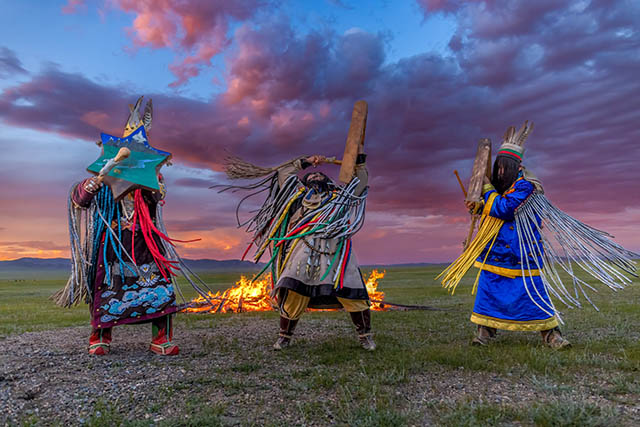
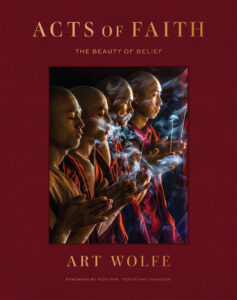
October is National Book Month, making it a fitting time to look ahead to the release of Art’s newest book, Acts of Faith: The Beauty of Belief. Drawing on more than four decades of photography across six continents, the book brings together over 225 images exploring the many ways people express faith, devotion, and spiritual connection—from vibrant ceremonies and pilgrimages to monastic traditions and quiet moments of reflection. Featuring a foreword by Pico Iyer and essays by Art Davidson, Acts of Faith offers a sweeping visual portrait of traditions that shape communities and connect people around the world.
Acts of Faith will be released on December 1, 2026, in a large-format 272-page clothbound edition published by Mandala Publishing / Insight Editions. In celebration of National Book Month and the book’s upcoming arrival, now is the perfect time to reserve your copy. Pre-order Acts of Faith through ArtWolfe.com to receive a signed copy and bonus print!
The next week or so is shaping up to be wonderfully busy, and I’m looking forward to a few opportunities to gather with friends, photographers, conservationists, and curious minds both back home in Seattle and online. Photography has always been about more than making images for me—it is a way of paying attention, telling stories, and building a deeper connection with the places and people that make this world so extraordinary.
If you’re nearby, I hope you’ll join me in person. And if you’re farther afield, there’s an opportunity to tune in from wherever you happen to be. Here are three upcoming events I’m especially pleased to be part of:
Wild Night Out
Wednesday, September 30 | Woodland Park Zoo, Seattle
I’m delighted to support Washington Wild as the community gathers for Wild Night Out, the organization’s biggest fundraising event of the year.
Washington’s wild lands and waters are a tremendous part of what makes this corner of the world so special, and protecting them takes people who care enough to show up, work together, and keep the conversation moving forward.
The evening will bring together conservation supporters for local food and beverages, a live auction, raffle, paddle raise, conservation awards, and plenty of time to reconnect with friends and others who share a love for Washington’s extraordinary natural places.
Proceeds from the evening help Washington Wild continue its work advocating for public lands and waters throughout the state.
Thursday, October 1 | Ivar’s Salmon House, Seattle
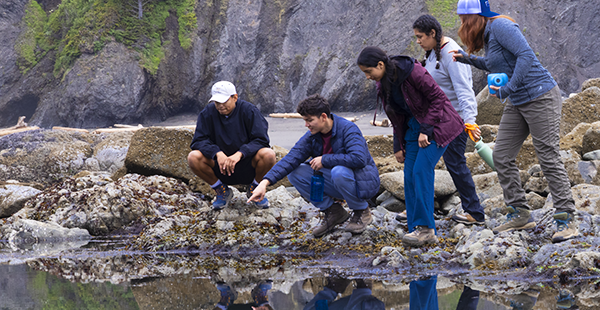
The following evening, I’ll be joining NatureBridge for a special gathering celebrating its Olympic National Park campus and the students who experience this remarkable landscape through its programs.
I’ll be sharing a curated presentation of photographs inspired by Olympic National Park—a place of extraordinary forests, coastlines, mountains, wildlife, weather, and light. It’s a landscape I never tire of returning to, and I’m looking forward to sharing some of those experiences through images and stories.
The evening will also feature former NatureBridge board member and NASA astronaut Dorothy Metcalf-Lindenburger, along with NatureBridge President and CEO Phil Kilbridge.
We’ll gather on the Seattle waterfront for drinks, appetizers, conversation, and even a taste of the educational experiences NatureBridge brings to students in Olympic National Park.
For photographers who can’t make it to Seattle—or who simply want to spend a Saturday immersed in photography—I’ll also be joining the New England Camera Club Council for a special virtual event featuring three presentations from photographers working across nature and landscape photography.
I’ll begin the day with my presentation, Wild Lives, exploring the animals, landscapes, cultures, and fleeting moments that have kept me traveling with a camera for more than five decades.
Later in the day, Nikon Ambassador Mike Mezeul II will present Earth, Wind, Fire, Water: Documenting Our Planet, followed by OM System Ambassador Peter Baumgarten with Into the Landscape.
It’s a full afternoon of photography, ideas, and inspiration for just $15. The presentations will be shown live and will not be recorded, so this is one of those occasions where you’ll want to be there when it happens.
One of the great pleasures of this work has always been the people I meet along the way. Photography may begin with a camera, but it quickly becomes a conversation—about wild places, cultures, conservation, creativity, and the endlessly surprising world we all share.
Whether I see you in Seattle or on the other side of a screen, I hope you’ll join me for one of these gatherings. Bring your curiosity, bring a friend, and perhaps we’ll all come away seeing the world a little differently.
For the better part of fifty years, I’ve had the extraordinary privilege of photographing people around the world as they gather, celebrate, pray, make pilgrimages, observe ancient traditions, all while trying my best to stay the heck out of the way while doing so.
Acts of Faith: The Beauty of Belief brings together more than 225 photographs from nearly forty countries, exploring the many ways faith, ritual, community, and the search for meaning are expressed across cultures.
Needless to say, this book has been a long time in the making. With a foreword by Pico Iyer and essays by Art Davidson, Acts of Faith is as much about our connections to one another as it is about the traditions themselves. Check out the video, then preorder your signed copy of the book with a print!
Our annual trip to Alaska came a bit later this year, so it was interesting to see the bears with a bit more meat on their bones after the smorgasbord that was the salmon run. Speaking of which – don’t forget to cast your vote for Fat Bear week 2026!
Next year’s Katmai adventure will take place a bit earlier in the season once again, and that adventure is nearly full already, so if you’ve been intrigued by this trip in the past, now is the time to join and give yourself plenty of time to prepare for what is always a rewarding trip.
If you’re looking to get up to Alaska before then and focus on other aspects of this vast and varied location, I’ll also be heading there in February to photograph eagles and the aurora. Sign up now to save a few hundred bucks with an early bird discount.
I recently had the pleasure of joining photographer Richard Bernabe on the Beyond the Lens podcast for a conversation about my new book, Acts of Faith: The Beauty of Belief. We talked about photography, religion and culture, and what I’ve learned from witnessing and photographing expressions of faith around the world.
Acts of Faith brings together photographs made over decades of travel, from large public celebrations and sacred ceremonies to pilgrimage, prayer, and much quieter moments of personal devotion. While the traditions themselves can be extraordinarily different, working on this collection has continually reminded me of the common threads of humanity that connect us.
The book includes hundreds of photographs from nearly forty countries, accompanied by a foreword from Pico Iyer and essays by Art Davidson that offer cultural and historical context for many of the traditions represented.
I hope you’ll listen to my conversation with Richard and learn a little more about the experiences and ideas behind the book!
Listen to Episode 122 of Beyond the Lens: Art Wolfe: Acts of Faith, Religion, Culture, and Celebrations of Humanity Through Photography
Acts of Faith is also available to preorder directly through my website. Copies ordered through the Art Wolfe store will be signed by me and include a bonus print.
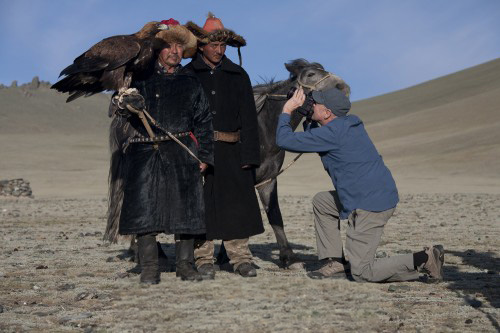
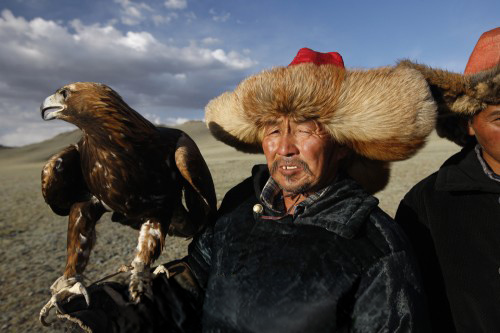
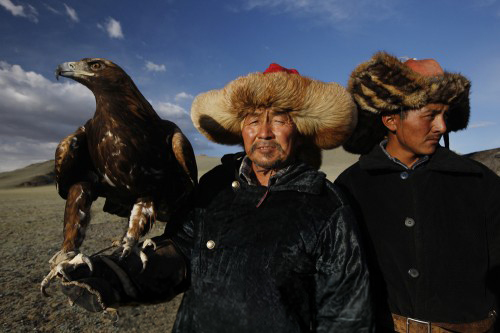
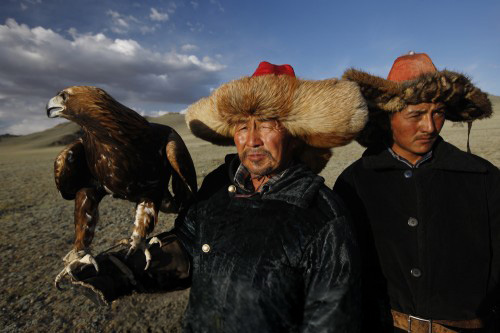
The Eagle Hunters of western Mongolia are a proud and hearty people that have an immense sense of culture. They also practice a particular form of falconry in which they hunt with eagles. My goals for photographing them within the context of their environment were three-fold: convey the expansive landscape of the region, feature the power of the eagle, and highlight the traditional dress that is ever fading in the historical cultures of the world today.
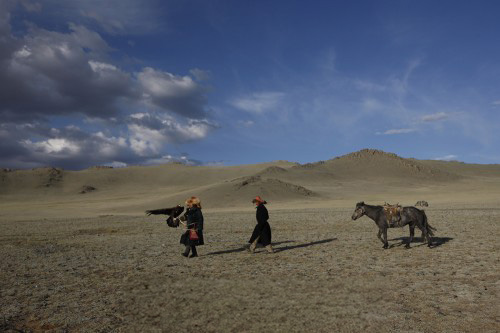
1.) This first photo establishes where are, and our starting point. A pair of eagle hunters traverse the open landscape bordering western Mongolia and Kazakhstan with their avian assistant with horse in tow. While it does show the landscape, there is little drama and the other goals are not present.
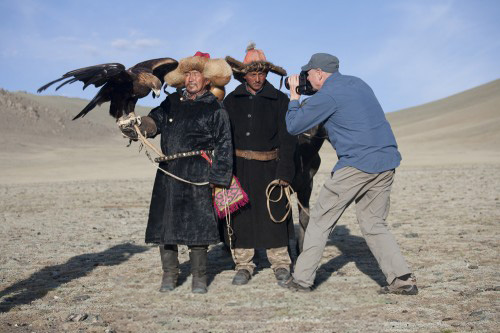
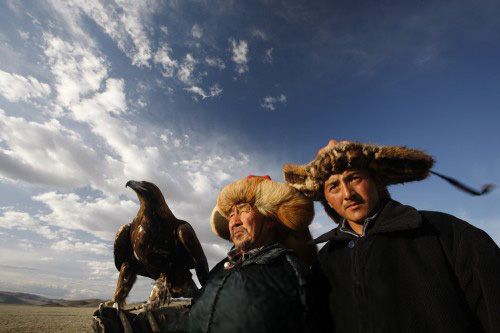
2.) Here you can see I move in close to my subjects; I’m using a 16-35 wide angle lens which allows me to keep the three subjects in prominence while also capturing a dramatic background. The lighting looks a bit flat in this shot, but up close I am able to find better results. We keep the horse out of the shot – we don’t want competition for our focus – the men and their eagle.
3.) In my third image, which is at a right angle to the direction of the sun, I have attached a polarizer to my wide angle. You can see how much more dramatic the light appears. This image also highlights the problems of working with dramatic light – very harsh shadows were cast every time the eagle moved its wings.
4.) The wing of the eagle is now down, but the man that’s controlling the eagle is casting a shadow on his assistant. As my goal is to bring this culture into the light and share it, it’s not an ideal result to have half of my subjects in shadow.
5.) I decided to get lower and shoot upwards to bring in some of the openness of the sky in hopes of creating more of a story than in the previous shots. Always keep experimenting within your photographic goals!
6.) The result is that I don’t have nearly the problems of the previous images with the shadows. This is a very satisfying image to me and meets the goals I set for myself in terms of capturing the men, animal, and landscape. This is where some may stop, thinking they’ve captured the shot they are looking for. In an effort to see what else is achievable, I begin working the scene a bit more.
7.) I’m standing at eye level again with the hunters, but the problem with this shot is that the man closet to me is staring straight at me. I like to maintain anonymity when I am taking pictures, and would prefer that the subject is not staring straight into my camera.
8.) I ask him to look straight ahead, but now with movement of doing so, it’s the eagle mugging for the camera. This isn’t necessarily a bad composition, but I would prefer the eagle in a different position.
9.) I move a little bit further around and discover I love the way the light is falling across the main eagle hunter and his beautiful fox fur hat. However, as you can see, I have moved in too close to get all three subjects in the frame.
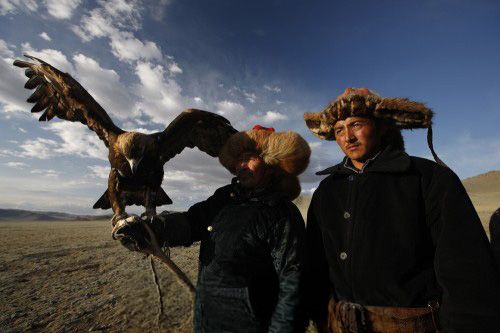
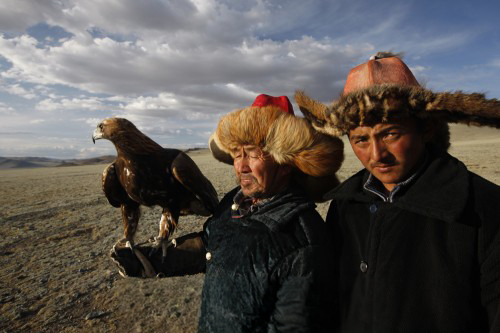
10.) I decide to back off a little bit, and now I am getting what I am looking for. I love the fact that the man in the middle is kind of looking my way without staring straight into the camera, the assistant is looking off to his left, and the eagle is conversely looking off in the opposite direction. There is a nice balance to this image, with no shadows on their faces. In addition, the eagle has nice light on his eye. This to me is a winner.
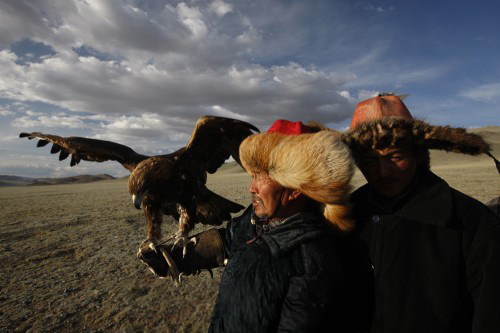
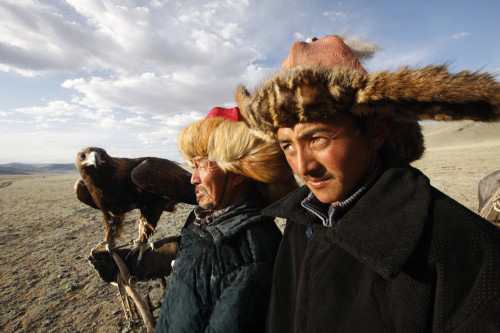
11.) I also like this last photo because it has a nice sense to it; the eagle is looking further opposite now, and is even more absorbed in what is going on in the landscape, rather than in what the photographer is busy trying to achieve. Both of these final two images are very strong photos for me, and I am very happy with the results.
A good balance of composition, dramatic light, openness of the land, traditional wardrobes – it all comes together in a very nice way in these last two images!
If Mongolia has long called to you, I invite you to join me in July 2027 for an unforgettable photographic journey through this extraordinary country. Together we’ll explore the sweeping landscapes and rich traditions that make Mongolia so compelling, from photographing Kazakh eagle hunters on horseback in the mountains of the west to experiencing the excitement of the Naadam Games, photographing wild horses on the steppe, and visiting with local shamans. This intimate trip is designed to give you exceptional photographic opportunities while allowing us to put these field techniques into practice in a truly remarkable setting.
For over four decades, Art Wolfe has traveled across continents documenting the many ways people express devotion, reverence, and spiritual connection. His forthcoming book, Acts of Faith: The Beauty of Belief, brings this extensive body of work together in a visually powerful journey through sacred ceremonies, pilgrimage sites, vibrant festival processions, contemplative monastic rituals, and quiet moments of prayer.
Sacred Traditions Across the World
Captured across six continents, these photographs explore how faith shapes identity, strengthens communities, and influences the rhythms of everyday life. Widely recognized traditions appear alongside rituals rarely witnessed beyond the cultures that sustain them. A foreword by acclaimed travel writer and cultural observer Pico Iyer considers the broader themes of spirituality and human connection, while essays by Art Davidson provide historical and cultural context for the practices depicted.
ACTS OF FAITH: The Beauty of Belief
Featuring over 225 color photographs from nearly forty countries, this 272-page clothbound hardcover includes two eight-page gatefolds and measures 11 × 14 inches. Published in English by Mandala Publishing / Insight Editions, Acts of Faith will be released October 20, 2026.
Pre-order through artwolfe.com to receive a signed copy and a bonus print!
Reserve Your Signed Edition
Published by Mandala Publishing and Insight Editions, Acts of Faith is a substantial 272-page clothbound volume featuring two eight-page gatefolds. The book will be published on October 20, 2026, and is now available for pre-order.
Pre-order today to receive a signed copy and a bonus print, and experience this reverent celebration of the beauty, diversity, and shared humanity found in spiritual traditions around the world.
Madagascar is a place of extraordinary contrasts, where richly layered cultures, everyday life, and some of the world’s most distinctive wildlife exist side by side. These photographs offer a glimpse into the rhythms of the island—from its people, communities, and landscapes to the remarkable animals found nowhere else on Earth. At the heart of the collection are Madagascar’s many species of lemurs, each uniquely adapted to the island’s forests and ecosystems, alongside other wildlife that reflects its exceptional biodiversity. Together, the images form a portrait of a country defined by natural wonder, cultural depth, and an enduring connection between people and place.
“A common mistake many photographers make is finding a subject they really like, but then failing to spend time refining the image. Often, there is a shot within a shot within a shot–but rarely does the observer see the photographer’s intent. What I have learned over the years is that if the subject is worthy of shooting, make it clear and unequivocal: this is the subject!
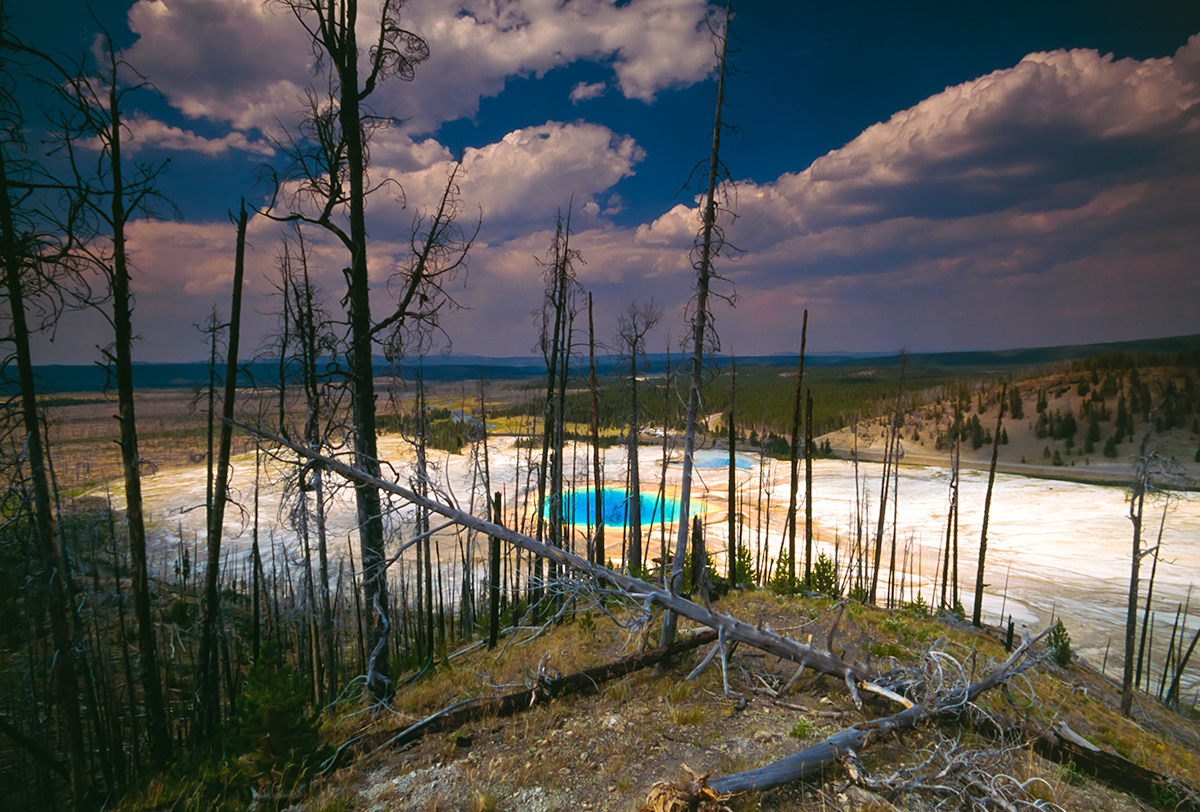
Here is a prime example. In this series of three photos, the first (above) was taken with a wide-angle and includes open sky, middle horizon, and the landscape of Yellowstone National Park, but it lacks a clear sense of what the subject is.
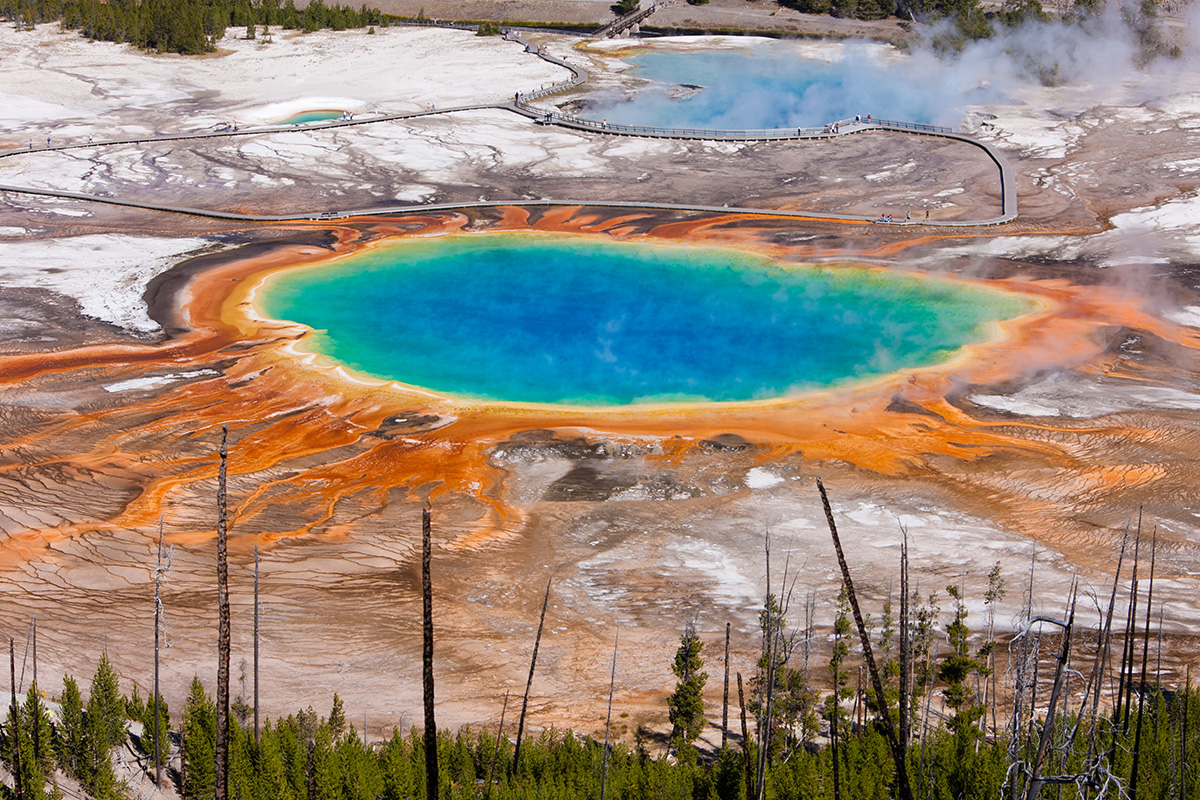
In the second shot I let go of the bright cumulus clouds, and started to zoom in. There is still a bit of clutter, including several cars, but I am on my way. This image may be fine as an editorial illustration in a guidebook, but it doesn’t convey what I was trying to get out of the landscape.
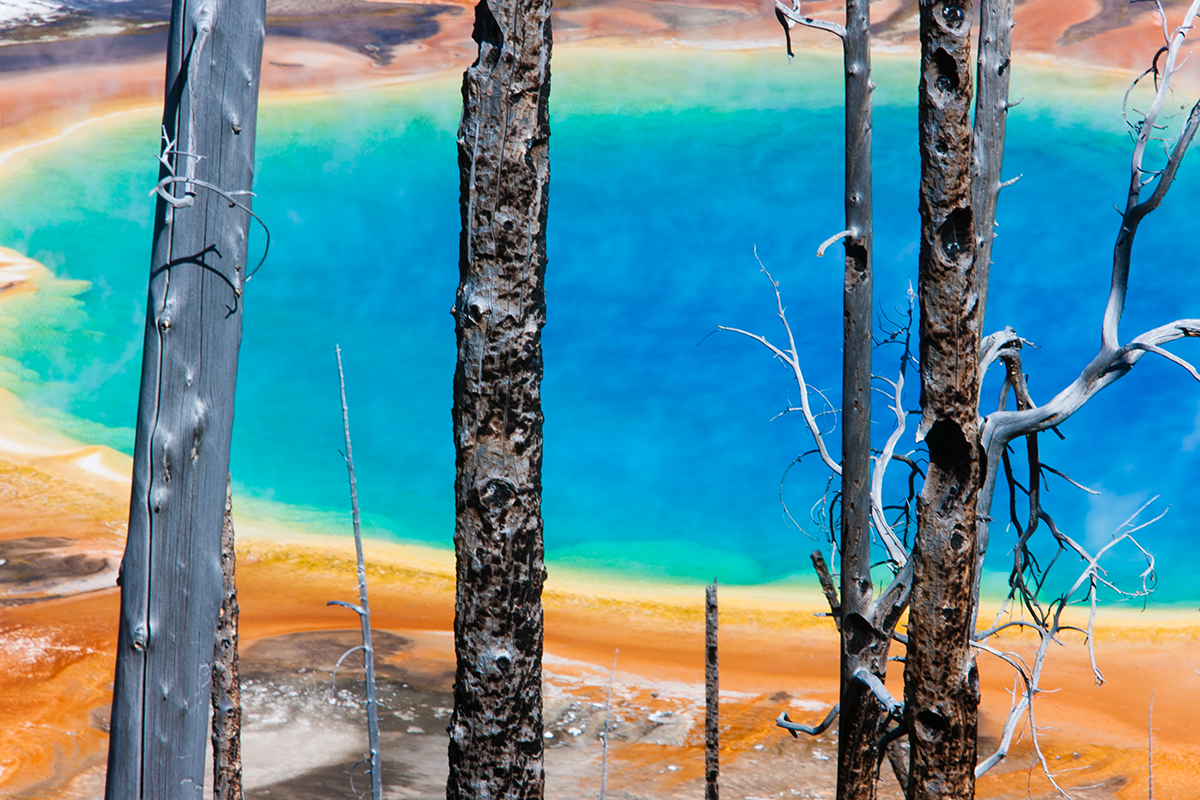
The last shot, however, creates a strong abstraction, combining the brilliant colors of the Grand Prismatic Spring with the weathered pines that died in the great fires of 1988.”
This is a classic landscape dilemma most photographers face, and a perfect example of making order out of chaos. If you don’t have the luxury of moving to a new vantage point from which to photograph, then you have to think of an alternate way to make the image say what you want.
In the second image, Art decided to shift to a vantage point that gave him a clearer view of the pool, the color of which dominates the otherwise monochromatic surroundings. In the final image, he has removed all distractions and emphasized the colorful spring, while still keeping a hint of the charred landscape, distilled to its most important elements. The result is a strong graphic combination of the pool in all its vibrancy, in the context of a landscape in eternal flux.
The past few months have taken me across an extraordinary range of landscapes, cultures, and wildlife—from the windswept expanses of Patagonia to the autumn color of New Zealand’s South Island, from the familiar forests and shorelines of the Pacific Northwest to the remarkable biodiversity of Madagascar. Each destination offered its own rhythm: the quiet presence of guanacos beneath the peaks of Torres del Paine, the luminous ice of Perito Moreno Glacier, the soft fall light around Mount Aspiring, and the intricate natural details found close to home on the Olympic Peninsula.
This collection reflects the variety that continues to inspire me after so many years in the field: rare wildlife encounters, sweeping landscapes, cultural moments, and the small abstract patterns that often reveal the character of a place. In Madagascar, lemurs, chameleons, baobabs, and daily life around Morondava offered a vivid reminder of how deeply connected people and place can be. Together, these images are a look back at a rich quarter of travel, observation, and discovery.
Enjoy the photos, and check out the full slate of remaining 2026 and 2027 workshops!